Electric Generators Symbols – Asutpp
As an expert electrician scribbling down schemas, I opt for clean lines representing generators—rotating and static ones — that power systems globally. Standardized graphical curlicues promote fluent electrical engineering dialogues across regions, companies. Whether GPIO or thermionic sources energize coils, whether stator couples AC or DC currents to grids, IEC and IEEE symbols lucidly convey methods. My diagrams must enlighten journals narrowly as Einstein’s formulae elegantly explain relativity. Though engineering drafting appears angular and rigid as turbines themselves, simple arcs sparking ingenuity enable progress’ forward movement. Energize ideas!
Download generator symbols in JPG ► Download generator symbols in PDF ►
See also: electric motor symbols ►
| Symbol | Description | Notes |
|---|---|---|
 |
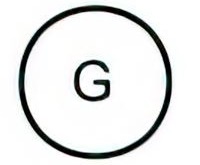
Name: Electric generator, rotating, general
Source: IEC 60417-2020 |
– |
 |
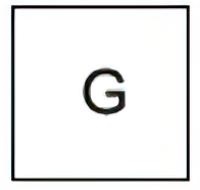
Name: Electric generator, general
Source: IEC 60617-2019 |
– |
 |
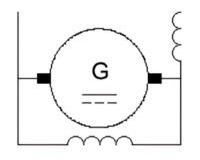
Name: Static generator, general symbol
Source: IEC 60617-2019, ANSI/IEEE Std 315A-1986 |
A1 |
 |
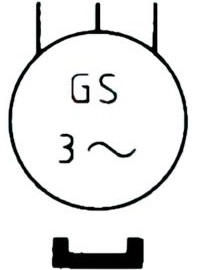
Name: Generator, DC, compound excited (short shunt)
Source: IEC 60617-2019, ANSI/IEEE Std 315A-1986 |
A2 |
 |
Name: Synchronous generator, three-phase with permanent magnet
Source: IEC 60617-2019, ANSI/IEEE Std 315A-1986 |
A2 |
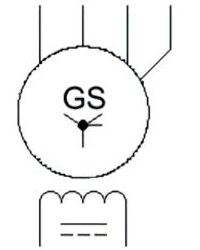 |
Name: Synchronous generator, three-phase, star connected, neutral brought out
Source: IEC 60617-2019 |
A2 |
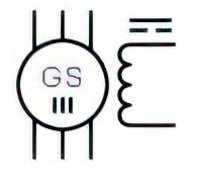 |
Name: Synchronous generator, three-phase, both ends of each phase winding brought out
Source: IEC 60617-2019 |
A2 |
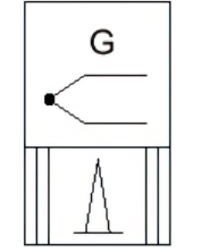 |
Name: Thermoelectric generator, with combustion heat source
Source: IEC 60617-2019, ANSI/IEEE Std 315A-1986 |
– |
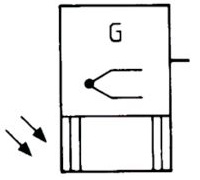 |
Name: Thermoelectric generator with non-ionizing radiation heat source
Source: IEC 60617-2019, ANSI/IEEE Std 315A-1986 |
– |
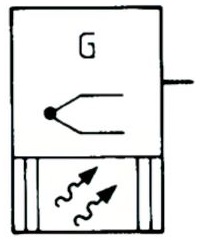 |
Name: Thermoelectric generator with radio-isotope heat source
Source: IEC 60617-2019, ANSI/IEEE Std 315A-1986 |
– |
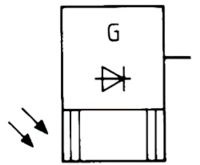 |
Name: Thermionic diode generator with non-ionizing radiation heat source
Source: IEC 60617-2019, ANSI/IEEE Std 315A-1986 |
– |
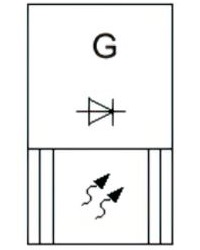 |
Name: Thermionic diode generator with radioisotope heat source
Source: IEC 60617-2019, ANSI/IEEE Std 315A-1986 |
– |
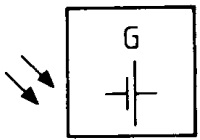 |
Name: Photovoltaic generator
Source: IEC 60617-2019, ANSI/IEEE Std 315A-1986 |
– |
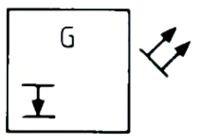 |
Name: Laser used as a generator
Source: IEC 60617-2019, ANSI/IEEE Std 315A-1986 |
A3 |
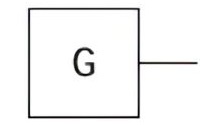 |
Name: Signal generator, general symbol
Alternative name: Waveform generator Source: IEC 60617-2019, ANSI/IEEE Std 315A-1986 |
A4 |
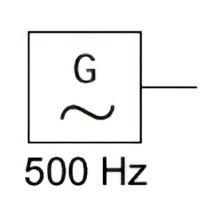 |
Name: Sine-wave generator, 500 Hz
Source: IEC 60617-2019, ANSI/IEEE Std 315A-1986 |
– |
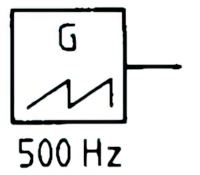 |
Name: Saw-tooth generator, 500 Hz
Source: IEC 60617-2019, ANSI/IEEE Std 315A-1986 |
– |
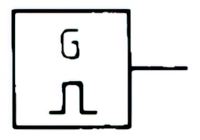 |
Name: Pulse generator
Source: IEC 60617-2019, ANSI/IEEE Std 315A-1986 |
– |
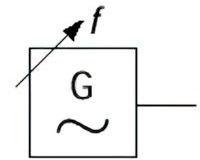 |
Name: Sine-wave generator with adjustable frequency
Source: IEC 60617-2019 |
– |
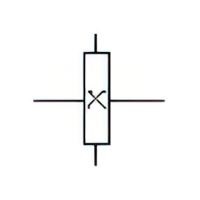 |
Name: Hall generator with four connections
Source: IEC 60617-2019 |
– |
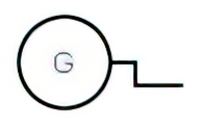 |
Name: Magneto
Alternative name: Hand generator Source: IEEE Std 315-1993 |
– |
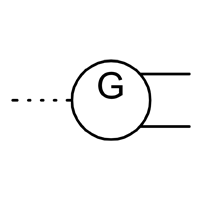 |
Name: Tachometer generator
Source: IEC 60417-2020 |
– |
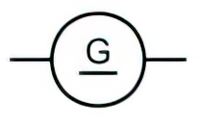 |
Name: Generator, direct-current
Alternative names: Dynamo, DC generator Source: IEEE Std 315-1993 |
– |
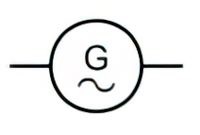 |
Name: Generator, alternating-current
Alternative names: AC generator Source: IEEE Std 315-1993 |
– |
Symbols of electric generators
A1:
For a rotary generator, use symbol 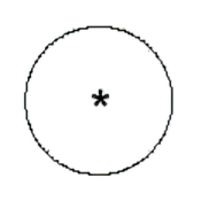 .
.
A2:
The symbols 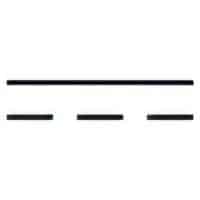 and
and 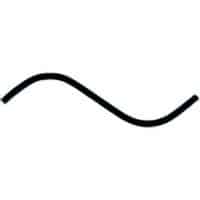 may be added, as shown in many of the examples.
A3:
The symbol, consisting of a downwards pointing vertical arrow between two horizontal lines, represents the transition from one energy level to a lower one. It should be drawn in the lower left-hand corner of the square.
A4:
Suitable symbols or legends shall be inserted in or added to the symbol outline to indicate the type of object.
